
Clinton County Court Records After a Jail Arrest
After a Clinton County jail arrest, two record tracks exist at the same time. The sheriff's Active Inmates roster is a custody tool. It can show that someone is listed in Clinton County Jail and can display booking identity fields. The court record is different. It tracks formal charges, case numbers, hearing dates, filings, docket entries, amendments, dismissals, dispositions, and other case events after a prosecutor or court filing creates the case.
That distinction matters because the public roster fields inspected for Clinton County do not show charges, bond, housing, court dates, or case links. For the custody side, use jail inmate records. For booking-photo questions, use jail roster mugshots. For the charge and case pathway after an arrest, use Clinton County Municipal Court for misdemeanor, traffic, civil, and small-claims matters, and use the Clinton County Clerk of Courts CaseLook system for Common Pleas felony criminal, civil, domestic relations, and appellate records.
How to Find Court Records After an Arrest
Start with the booking information only to confirm identity and timing. The Active Inmates portal may show a name, booking number, booked date, redacted Jail ID, redacted date of birth, booked age, race, sex, height, weight, hair, eye, and a current booking photo. It does not replace the court docket. Once the case is filed, the court system is where the formal charge language, case number, next hearing, docket activity, and final outcome should be checked.
- Confirm the person is or was booked into Clinton County Jail and record the exact name spelling and booking date.
- For misdemeanor or traffic cases, search Clinton County Municipal Court by name, case number, hearing date, file date, or ticket number.
- For felony criminal cases, use the Clinton County Clerk of Courts CaseLook entry page for Common Pleas records, or contact the Clerk when verified information is needed.
- If the question is the next court appearance, check the Municipal Court daily docket for misdemeanor, traffic, civil, and small-claims settings.
- If the case is missing, allow for filing and posting delay, then call the court or Clerk rather than assuming no case exists.
The Clerk CaseLook page warns that displayed data can lag behind filings and judicial action by at least 24 hours and sometimes longer. It also states that verified information requires a request to the Clinton County Clerk of Courts or an in-person visit during regular business hours. Cynthia R. Bailey is the Clerk of Courts, and the legal office hours in the research are Monday through Friday, 8:00 a.m. to 4:00 p.m.
The Clinton County Municipal Court record-search form is the main online path for local misdemeanor and traffic case records. The screenshot below shows why names, dates, case numbers, ticket numbers, case-type filters, and CAPTCHA details all matter when looking for a post-arrest court record.
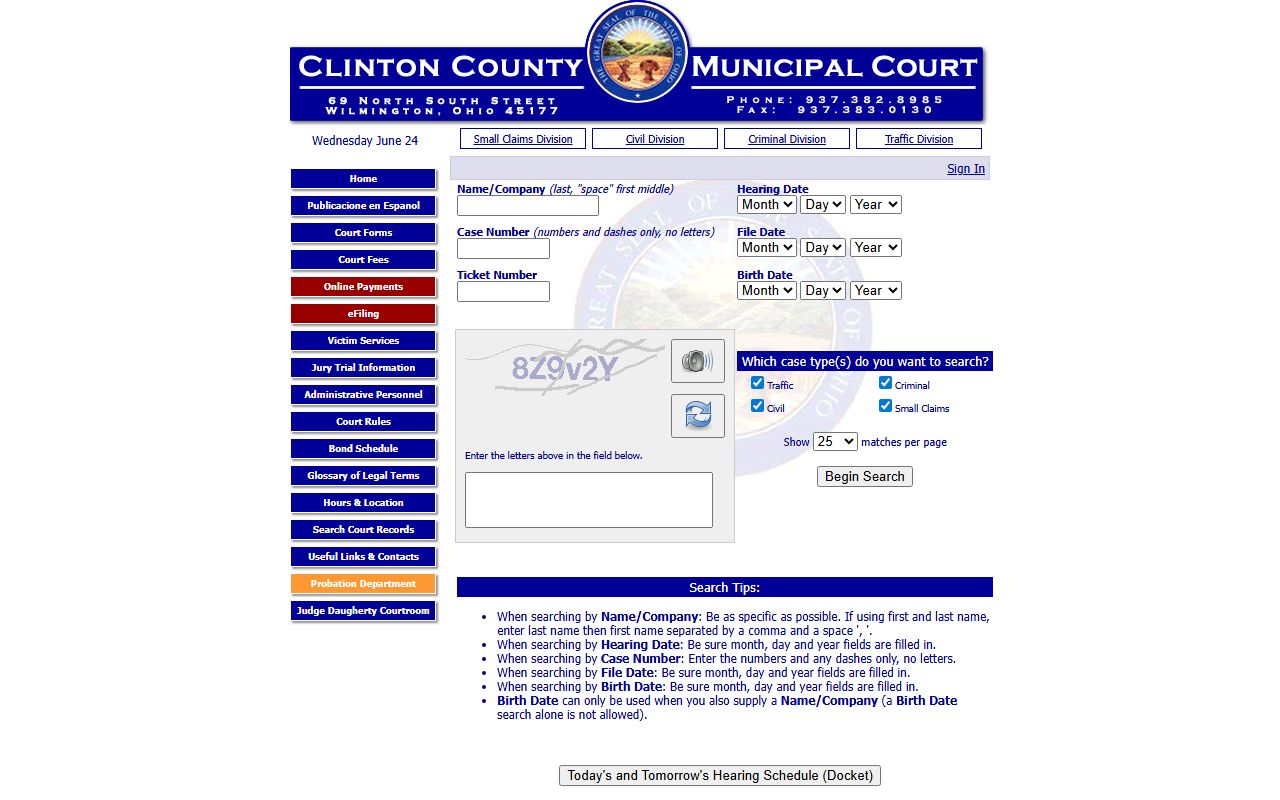
Use the search form as a case-finding tool, then compare its case number and hearing details against the booking date and any court paperwork received after the arrest.
Municipal Court Search Fields
Clinton County Municipal Court covers traffic, criminal misdemeanor, civil, and small-claims records. Its public search page is form-driven, so the best search depends on which facts are known. A name search is often the starting point, but a case number, ticket number, file date, or hearing date can be more precise when available.
| Field | How It Works | Notes |
|---|---|---|
| Name/Company | Text search | Search tips say to be specific; first and last names should be entered in last-name-first format when both are used. |
| Hearing Date | Month, day, and year dropdowns | Use when looking for scheduled appearances or checking whether a case is on a certain date. |
| Case Number | Text field | The inspected form instructs users to enter numbers and dashes only, with no letters. |
| File Date | Month, day, and year dropdowns | Useful when a charge was recently filed after booking. |
| Ticket Number | Text field | Most useful for traffic and citation-based matters. |
| Birth Date | Month, day, and year dropdowns | Can only be used with Name/Company; it is not a stand-alone search. |
| CAPTCHA | Required response | The form requires a CAPTCHA before submission. |
| Case Types | Checkboxes | Traffic, Criminal, Civil, and Small Claims checkboxes can filter the search. |
| Show Matches | Result-size selector | Options in the inspected form included 25, 50, 100, and 250 results per page. |
| Daily Docket | Separate button/link | Opens the daily hearing schedule rather than a name-result list. |
The daily docket adds another angle. It displays the docket date, party name, judge field, time, description, case number, docket-entry link, and case type. Descriptions may identify events such as arraignment, pre-trial, trial to court, rescheduled arraignment, or pay-or-appear settings.
Common Pleas and Clerk CaseLook Records
Felony criminal cases and other Common Pleas matters route through the Clinton County Clerk of Courts. The Clerk's office files, dockets, indexes, and preserves pleadings for felony criminal, civil, domestic relations, and 12th District Court of Appeals records. For a serious arrest, the first jail booking may appear before the Common Pleas record is available in CaseLook, especially if the matter begins in Municipal Court and is later bound over, indicted, or otherwise filed in Common Pleas.
The Clinton County Clerk of Courts CaseLook page opens with a disclaimer and should be treated as a public convenience copy. It warns that data may be altered, amended, or modified without notice and that a delay of at least 24 hours, and sometimes longer, can occur between court activity and online posting.
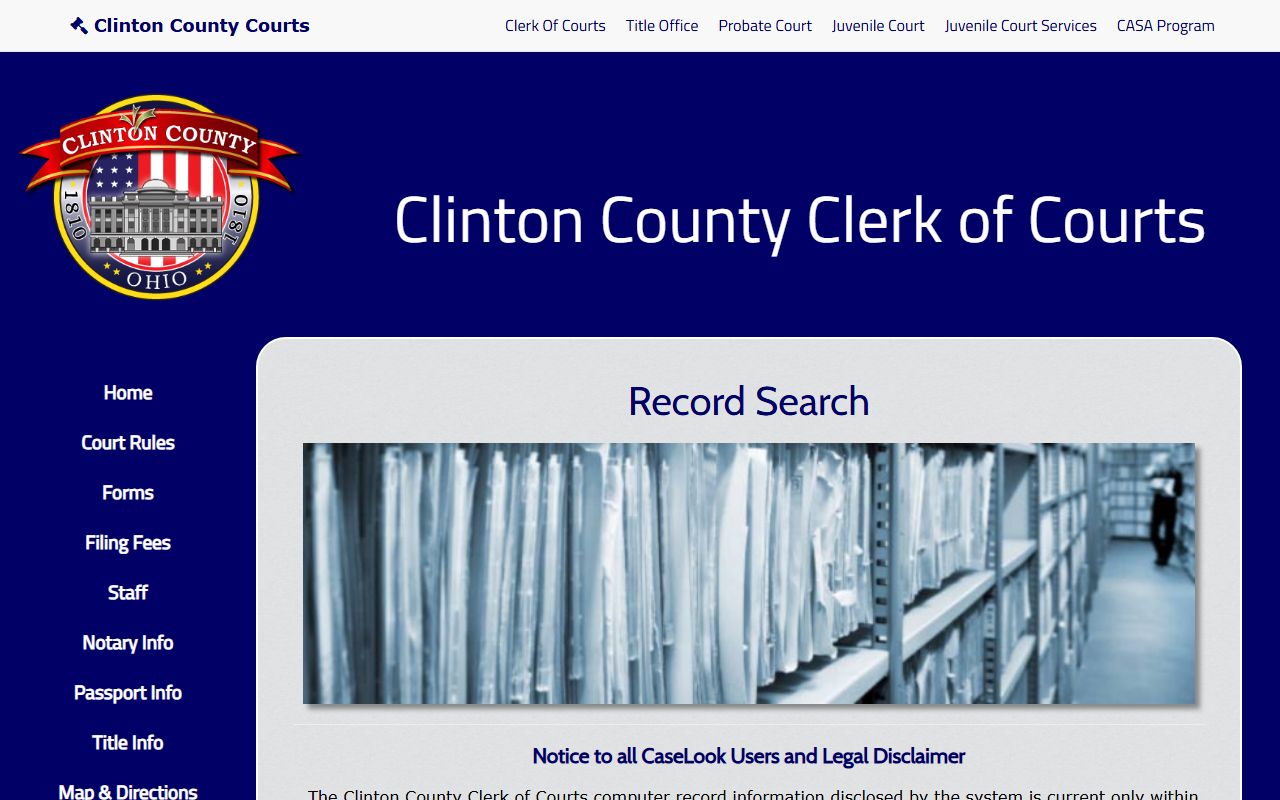
When a court record affects bond, employment, licensing, immigration, custody, or another legal decision, request verification directly from the Clerk instead of relying only on the screen result.
Charging Documents After an Arrest
A jail arrest does not by itself settle what the final court charge will be. Booking may begin with an alleged offense, a warrant, or a complaint. The court case begins to take shape when a charging document is filed and docketed. In Clinton County, misdemeanors and traffic matters commonly appear through Municipal Court, while felony criminal matters can proceed through prosecutor review, preliminary proceedings, indictment, information, or Common Pleas filing.
| Document | Typical Use | What to Check |
|---|---|---|
| Complaint | Often used to start misdemeanor or initial criminal proceedings. | Look for the case number, offense wording, filing date, and next hearing. |
| Traffic Ticket or Citation | Used for traffic cases and some citation-based offenses. | Search Municipal Court by ticket number when available. |
| Information | A prosecutor-filed charging document in certain criminal matters. | Confirm the filed count, level, and any later amendments. |
| Indictment | A grand-jury charging document, usually associated with felony cases. | Check Common Pleas records for count numbers, arraignment, and disposition. |
| Warrant or Holder Entry | May explain why a person was picked up or remains held. | Call the court or jail when the public docket does not show the hold clearly. |
Charge Status and Docket Meaning
Charges can change after an arrest. A prosecutor may file a different charge than the one associated with booking, reduce or amend a count, dismiss a count, add a new count, or move the case to another court. The docket is the better source for those changes because it records filings, hearings, entries, and dispositions over time.
| Status | Plain Meaning | Why It Matters |
|---|---|---|
| Pending | The case or count is still active. | Expect future hearings, filings, or bond/status updates. |
| Amended | The charge wording, level, count, or related filing changed. | The current court charge may not match the original arrest description. |
| Reduced | The case moved to a lesser charge or lower level. | Disposition and sentencing exposure may differ from the first accusation. |
| Dismissed | The court dismissed the case or a count. | A dismissal is not the same as sealing or expungement. |
| Bound Over | A felony-level matter moved from a lower-court stage toward Common Pleas. | Search Clerk CaseLook if the Municipal Court result stops showing the full path. |
| Disposed | The court has entered an outcome. | Read the docket entry to distinguish plea, conviction, dismissal, or other result. |
Prosecutor Role in Filed Charges
Ohio counties use the term Prosecuting Attorney rather than District Attorney. Clinton County's Prosecuting Attorney is Brian A. Shidaker. The prosecutor's office is listed at 103 E. Main Street, Wilmington, OH 45177; phone 937-382-4559; email prosecutor@clintonctyprosecutor.com; and office hours Monday through Friday, 8:00 AM to 4:00 PM. The prosecutor's review helps explain why jail booking information may differ from the formal charge record that later appears in court.
The county Prosecuting Attorney page is the official contact source for the office involved in felony prosecution after arrest. Use it for routing information, not as a substitute for the court docket or legal advice.
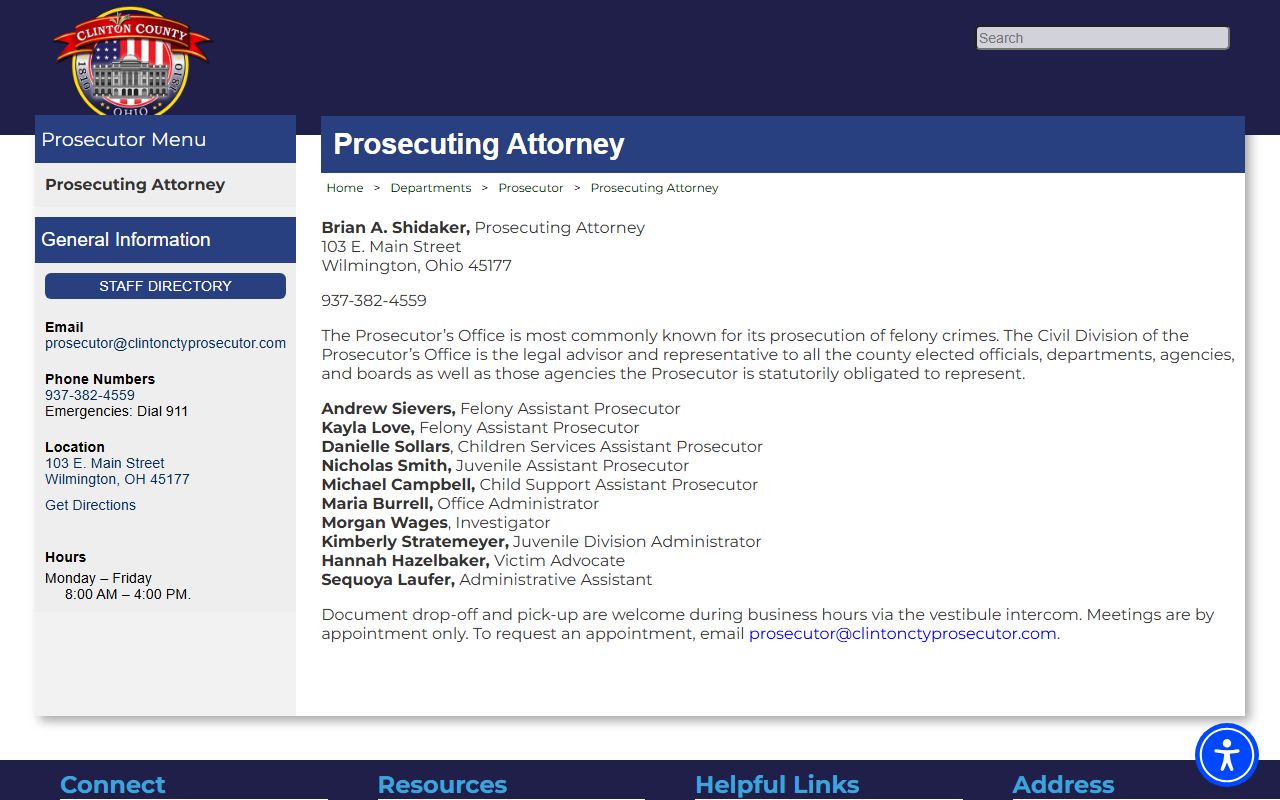
For a filed case, the docket remains the source for charge status, hearing dates, and disposition; the prosecutor's office is part of the charging pathway, not the public case index.
Bond and Release After an Arrest
Bond information in Clinton County should be confirmed through the jail and the court handling the case. The Municipal Court publishes a bond schedule page and a linked bond-schedule PDF, but exact amounts were not extracted in the research. The public Active Inmates roster does not show bond, so a person should not attempt payment based only on roster status.
| Bond Type | How It Works | Clinton County Checkpoint |
|---|---|---|
| Recognizance / PR | Release based on a promise to appear, sometimes with conditions. | Confirm with the court or jail because conditions may control release. |
| Cash Bond | Payment of a court-ordered amount. | Ask the court or jail for accepted payment methods before going. |
| Surety Bond | A licensed surety or bail agent posts bond where allowed. | Verify whether surety is allowed on the specific case. |
| No-Bond / Hold | Payment will not release the person because a judge or agency hold controls custody. | Ask about other-county warrants, probation/parole holds, federal holds, ICE detainers, or no-bond orders. |
Before attempting payment, call Clinton County Jail at (937) 383-4813 or (937) 383-3292, or contact the court listed on the docket. A hold from another county, probation or parole, federal custody, immigration custody, or a no-bond order may keep a person in custody even when a local case appears to have a bond setting.
Warrants That Lead to an Arrest
No official Clinton County, Ohio sheriff active-warrant search page was found in the inspected sources. Do not rely on similarly named warrant pages from other Clinton County jurisdictions. For local warrant status, use the sheriff's non-emergency phone number, the jail phone numbers if booking has already occurred, Municipal Court dockets for misdemeanor or traffic bench-warrant clues, and Clerk/Common Pleas records for public felony filings.
| Warrant Type | Meaning |
|---|---|
| Arrest Warrant | A court order authorizing law enforcement to arrest a person. |
| Bench Warrant | A judge-issued warrant, often tied to failure to appear or violation of a court order. |
| Search Warrant | An order authorizing a search of a place, person, or property; it is not the same as an arrest warrant. |
| Fugitive Warrant / Holder | A warrant or hold from another jurisdiction that may affect release from Clinton County Jail. |
Use caution with in-person warrant questions. An active warrant can result in arrest. A defense attorney can check case status, bond options, and appearance requirements without turning a public-record search into a risky courthouse or sheriff's-office visit.
Charges vs. Convictions
A charge is an accusation or filed count. A conviction is a court outcome after a plea, verdict, or other finding. Court records after a jail arrest may show both kinds of information over time, but they should not be treated as the same thing. Read the disposition and docket entries before describing a case outcome.
| Charge | Conviction | |
|---|---|---|
| Stage | Filed accusation or count after arrest. | Final or case-level outcome after plea, trial, or finding. |
| Meaning | The person is accused of the offense listed. | The court has entered an outcome establishing guilt on that count. |
| Can Change? | Yes. Charges may be amended, reduced, added, or dismissed. | May be affected by appeal, sealing, expungement, or later court orders. |
| Where to Verify | Complaint, indictment, information, docket entries. | Disposition entry, sentencing entry, judgment entry. |
Sealed vs. Expunged Court Records After an Arrest
Ohio public-record access is broad, but not every record remains publicly available in the same way forever. Juvenile matters, sealed cases, protected information, active investigations, and exempt details may be withheld or redacted. Sealing and expungement are court-controlled remedies; a public roster, online docket, or third-party copy may not update at the same moment a court order is entered.
| Sealed | Expunged | |
|---|---|---|
| General Effect | Public access is restricted by court order. | Record treatment can go further, depending on the order and Ohio law. |
| Public Web Search | The case may stop appearing publicly or may show limited information. | Public access may be removed or sharply limited if the order applies. |
| Agency Access | Some government or law-enforcement access may remain for authorized purposes. | Authorized access rules depend on the specific statute and order. |
| Next Step | Review the court order and Clerk instructions. | Confirm with the court or an attorney rather than assuming automatic removal everywhere. |
Ohio Public Records Law and Jail Standards
ORC 149.43 is Ohio's Public Records Act. It requires public offices to make public records available for inspection and copying unless an exception applies. ORC 341.01 gives the sheriff charge of the county jail and the people confined there, and ORC Chapter 341 includes jail-register requirements. Ohio Administrative Code Chapter 5120:1-8 sets minimum standards for full-service jails such as Clinton County Jail.
Public-use limit: This site is not a consumer reporting agency. Do not use casual court, jail, or arrest lookups for credit, employment, tenant, insurance, or other FCRA-regulated decisions.
For Clinton County, treat online court and jail displays as access points, not final certification. The jail roster itself points people to the Sheriff's Office for official records and official inmate lists, while the Clerk CaseLook disclaimer warns of posting delays and directs users to the Clerk for verified information.